
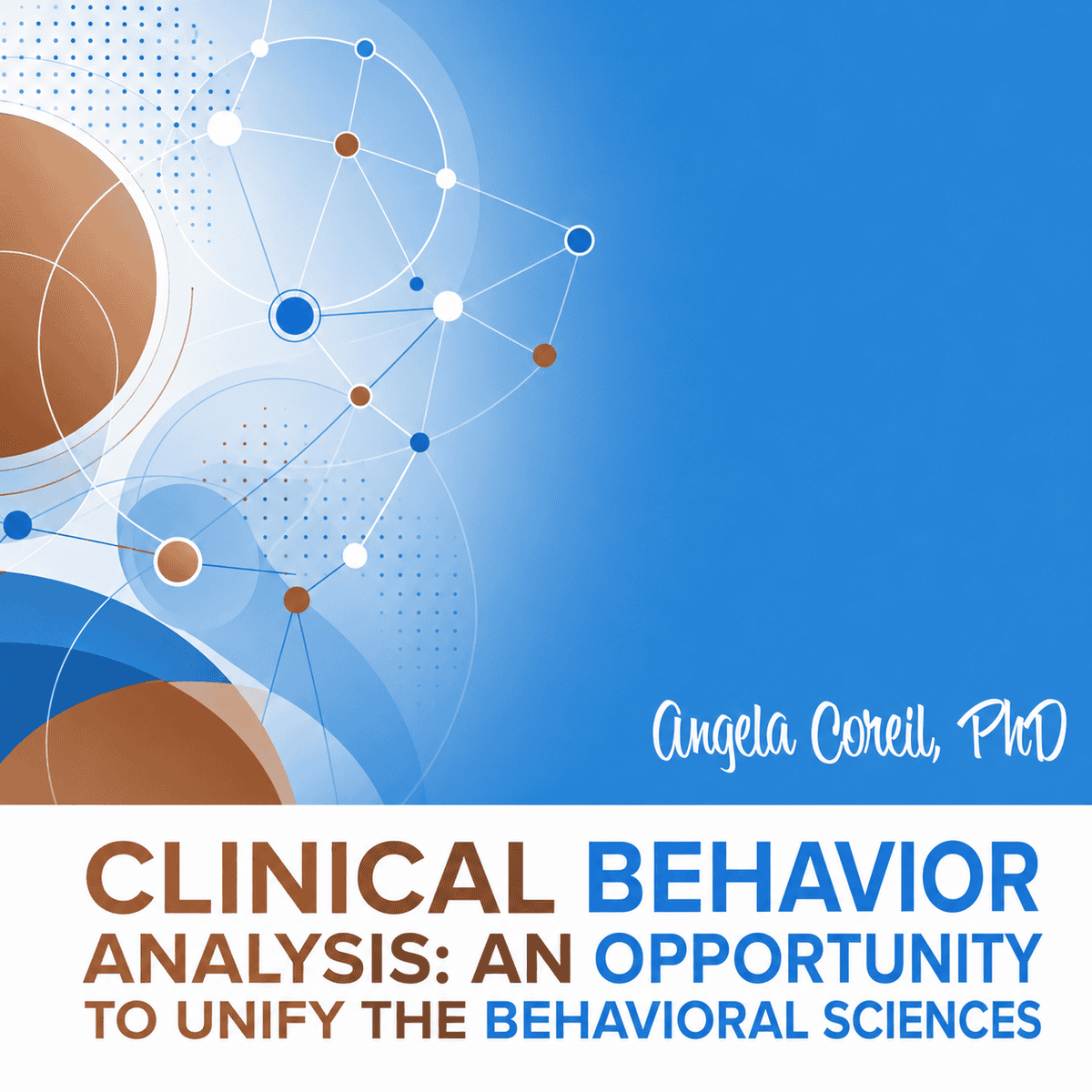
Clinical Behavior Analysis: Unifying the Behavioral Sciences
$20.00
ACE Provider: The Clinical Behavior Analyst
BACB ACE Provider Number: OP-24-10952
ACE Coordinator and CE Instructor: Angela Coreil, PhD, BCBA
Speaker: Angela Coreil, PhD, BCBA
Continuing Education: 1.0 Learning CEU, General
Instructional Duration: 60 minutes
Format: Online, asynchronous video
Intended Audience: BCBA and BCaBA certificants
Original Publication Date: March 10, 2022
Course Access Period: One year from the date of purchase
Course Description
Early behavior analysts, including B. F. Skinner and C. B. Ferster, examined the environmental contexts and contingencies associated with behavior commonly characterized as mental illness. Their work also recognized that identifying the environmental variables influencing behavior does not necessarily result in successful behavior change.
Clinical Behavior Analysis (CBA) applies behavior-analytic principles and methods to the conceptualization and treatment of behavior frequently associated with psychological distress and mental health conditions. Although behavior analysis and mainstream clinical psychology developed along increasingly separate paths, later developments in the analysis of verbal behavior—including Relational Frame Theory and research on rule-governed behavior—helped establish a foundation for the contemporary development of CBA.
This course introduces Clinical Behavior Analysis and examines its potential contributions to both behavior analysis and psychology. Participants will consider how private events may be analyzed as behavior to be explained rather than assumed to be the causes of other behavior. The course also examines how behavioral case formulation and intervention may help connect traditions that have often been treated as separate areas of psychological science and practice.
Instructor Information
Angela Coreil, PhD, BCBA, is a clinical psychologist and behavior analyst with expertise in clinical behavior analysis, contextual behavioral science, and the application of behavior-analytic principles to complex clinical concerns. She serves as the ACE Coordinator for The Clinical Behavior Analyst.
Learning Objectives
After completing this course, participants will be able to:
1. Identify one historical or professional contingency that contributed to the separation of mental health care and traditional behavior-analytic practice.
2. Define Clinical Behavior Analysis.
3. Describe one potential scientific or clinical benefit of greater integration between behavior analysis and other areas of psychology.
Completion Requirements:
To earn 1.0 Learning CEU, participants must:
Complete the full course.
Respond to all required knowledge-check questions.
Complete the course evaluation.
After meeting all requirements, participants may download their CEU certificate through their My CBA account. The course and associated CEU requirements must be completed within one year of purchase.
Purchasing and Course Access
Your order should process immediately. After purchase, you will receive an email confirming your payment. The course will then be available through your My CBA account.
Disclosures
Affiliations and conflicts of interest: Angela Coreil owns The Clinical Behavior Analyst and may receive revenue from purchases of this course.
ACE Provider: The Clinical Behavior Analyst
BACB ACE Provider Number: OP-24-10952
ACE Coordinator and CE Instructor: Angela Coreil, PhD, BCBA
Speaker: Angela Coreil, PhD, BCBA
Continuing Education: 1.0 Learning CEU, General
Instructional Duration: 60 minutes
Format: Online, asynchronous video
Intended Audience: BCBA and BCaBA certificants
Original Publication Date: March 10, 2022
Course Access Period: One year from the date of purchase
Course Description
Early behavior analysts, including B. F. Skinner and C. B. Ferster, examined the environmental contexts and contingencies associated with behavior commonly characterized as mental illness. Their work also recognized that identifying the environmental variables influencing behavior does not necessarily result in successful behavior change.
Clinical Behavior Analysis (CBA) applies behavior-analytic principles and methods to the conceptualization and treatment of behavior frequently associated with psychological distress and mental health conditions. Although behavior analysis and mainstream clinical psychology developed along increasingly separate paths, later developments in the analysis of verbal behavior—including Relational Frame Theory and research on rule-governed behavior—helped establish a foundation for the contemporary development of CBA.
This course introduces Clinical Behavior Analysis and examines its potential contributions to both behavior analysis and psychology. Participants will consider how private events may be analyzed as behavior to be explained rather than assumed to be the causes of other behavior. The course also examines how behavioral case formulation and intervention may help connect traditions that have often been treated as separate areas of psychological science and practice.
Instructor Information
Angela Coreil, PhD, BCBA, is a clinical psychologist and behavior analyst with expertise in clinical behavior analysis, contextual behavioral science, and the application of behavior-analytic principles to complex clinical concerns. She serves as the ACE Coordinator for The Clinical Behavior Analyst.
Learning Objectives
After completing this course, participants will be able to:
1. Identify one historical or professional contingency that contributed to the separation of mental health care and traditional behavior-analytic practice.
2. Define Clinical Behavior Analysis.
3. Describe one potential scientific or clinical benefit of greater integration between behavior analysis and other areas of psychology.
Completion Requirements:
To earn 1.0 Learning CEU, participants must:
Complete the full course.
Respond to all required knowledge-check questions.
Complete the course evaluation.
After meeting all requirements, participants may download their CEU certificate through their My CBA account. The course and associated CEU requirements must be completed within one year of purchase.
Purchasing and Course Access
Your order should process immediately. After purchase, you will receive an email confirming your payment. The course will then be available through your My CBA account.
Disclosures
Affiliations and conflicts of interest: Angela Coreil owns The Clinical Behavior Analyst and may receive revenue from purchases of this course.
Only logged in customers who have purchased this product may leave a review.

Reviews
There are no reviews yet.