

You and I: Understanding and measuring high impact Functional Analytic Psychotherapy (FAP)
by Angela Cathey
There are many ways to understand every therapy. Here I’ll offer a granular analysis of what seems to occur in the high impact FAP. What I present here is not an opposition to the current model of FAP but a different layer of analysis. I would agree that contingent reinforcement of behavior is a key mechanism of FAP. The purpose of an RFT-level analysis is to offer additional ways to measure and understand some of the effects of FAP that are otherwise difficult to characterize and measure.
I’m focusing on the symbolic relations that are created in what I call ‘high impact’ FAP. What I’m calling to in this description is the tendency of present moment relational therapy to become more powerful and evocative than one would normally suspect of a treatment based on reinforcement of adaptive behavior via the therapeutic relationship.
Those of you who have been to a FAP intensive or are highly experienced in FAP may be familiar with the report of FAP being “life-changing”, “transformative”, etc. To some extent one would hope most treatments are experienced this way; however, the rate which participants report intense response to FAP is likely higher. And, an RFT driven analysis there are empirical logical explanations for why those that experience FAP as moving may experience it as life-altering.)
Note that RFT is about symbolic relations and their properties. Patterns of pairing (between behavior, language in any form, sensations/perceptions, contexts) can all become meaningful over time through association with important (e.g., painful, joyful) experiences.
This is no different than operant reinforcement or classical conditioning – the type of pairing, the frequency/schedule, context, etc. all affect the relations made. The only difference here is that the SD can show up more easily symbolically (via language or some other cue).
So, let’s now look at perspective (the “I”) that orients your experience. You walk through life each day seeing, doing, feeling, thinking… and each of these things becomes a part of your continuing experience. In some way, they have become paired with the “I”. Perhaps very weakly paired but paired none the less. (See RFT: The space-time of the human universe for further description of perspective).
Experiences that happen over and over, including consistencies in the way that people describe you or relate to you become a part of your “I” and your concept of the other, or symbolic “YOU”.
The way you explain what occurs in these relations gives them additional power as it becomes a symbolically ‘sticky’ way of seeing the world (i.e., coherence relations, schema). You see others through this story of yourself and yourself as well. They, similarly, have stories about themselves and others and how people relate by which they organize their experience.
Now consider that everything you do in a relationship creates associations between:
The “YOU” and “I” present, or symbolically referenced (spoken about, etc.). Further, the emotions you express, the way that you talk about yourself and others, the behaviors you emit in any respect all become attached to the “YOUs” and “Is” in the room. (Yes, plural “I”s through the sometimes distinct tracks of symbolically defined behavior (e.g., roles, contexts, etc.) serving to create classes of behavior that ‘hang’ together.
Stop and consider that for a bit… Do you often belittle yourself in your own mind or in front of others? If you do you may find that people’s behavior towards you will begin to reflect this relation or that your own behavior towards your self will become less compassionate over time.
Our learning histories, ‘sticky’self-stories, and current histories all affect our sense of self and other. And, because the “I” is theoretically the relation most complexly derived (it is always there as a part of the associations forming) transformation of the “I” can ripple through all the attached relations.
Stop and think for a minute. All your sensory experience, all your visual perceptions, all your everything is hooked right through that “I” relation. So, what if it is altered? What will you experience?
If the alteration is “good”, perhaps you feel like this?

Now let’s switch to thinking about the process of an intimate relationship, using a lovely cheesy music video metaphor that we’ll then build upon both these to discuss the complex symbolic relating that can occur in high impact FAP.
Do watch as it will help you connect to the symbolic journey we’re going on through metaphor. The Story of My Life
Imagine that the moments of your life are pictures. The experiences that reflect complexity (ERRRs) most often are a series of pictures with richly emotional colorful (good or bad) details. See the birth of your child, and the hundreds of pictures to capture the complex experiences that follow.
Now, look around your home… are there single large photos blown up… special moments you wanted to save. These are likely snapshots of complexly derived moments (see the pictures from Hawaii… feel the sand beneath your toes? Sometimes complexity is lovely.

Now there are thousands of random shots in between that capture random moments, important relationships, accomplishments… and because this is your life, not a photo album imagine that all the moments you never wanted to remember are also there. In their full, and sometimes awful glory.
That time you fell on your ass in front of a crowd…
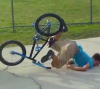
Your worst mistakes. All of them are memorialized in all their complex and highly derived glory (because rumination derives!) in big lovely photographs you keep hidden away.
All these moments that form the history of you, your pain, your joys, your disappointments… see them all strung along the wall back behind you (in time).
Now imagine opening your heart and mind to pull out these photographs and show another. Each time that you hand a painful or joyful memory to this person a connection between you forms, a connection between both of you and the memories seen, the emotional expressions of both (YOU and I) then shape the memories and the relationship. There’s a heck of a lot of relating going on here – temporal, deictic, high complexity, transformation of stimulus functions through coordination/distinction/opposition with the other.
And, this… is just a close relationship. This isn’t even therapy.
Notice how we all are deeply affected by our relations, good or bad, to those around us.
People are a core of our experience, our ‘self’, and our world.
Now, let’s work towards understanding the complexities of high impact Functional Analytic Psychotherapy relating.
Open this and listen while you Imagine.
Let’s walk through a super simplified course of FAP via the special case of intensives. For the unfamiliar, this is 3-4 day long training of therapists who come to hone their skills together by experiential practice.
Much like most FAP treatment itself it generally begins with some sort of Life History or discussion of adaptive (CRB2) and maladaptive (CRB1) behaviors. The very discussion pulls the relations along from the past, symbolically, to accompany the present. The power of the past (pain and joy) becomes more accessible by relation.
Now you begin to hand not the pictures described above but your real present moment experience (that is sometimes still fused with pain) to your colleagues. You may be brought to tears by the transformation of stimulus functions simply involved in discussing your pain and struggles in front of another.
As you engage in this interaction the other makes out-to-in parallels creating a symbolic I-YOU relation linking to the past relations involved (to people and behaviors that can be present in the now for changing).
In doing this, you are allowing the present moment interaction to alter contingencies set in other relationships because the attachment of past and present I-YOU to in the moment I-YOU is like creating a transcendent I-YOU.
The impact of the learning experience naturally becomes stronger as the symbolically present and in vivo relations combine. Anything altered through reinforcement or otherwise, can now affect the past, the present, the “I” and the “YOU” in the present, and all other “Is” and “YOUs” relevant to these relations.
At this point, contingent reinforcement takes on a new life. You’re shaping behavior but you’re also shaping relations, which allows you to interact with and shape someone’s relating to what occurred long with someone else. The shaping of that entire chain of relation can in a sense begin to over-write the relations of the self, the other, and the world.
The result can be “magic” and leave people changed. A present moment, relational therapy, driven by behaviorism. This is powerful medicine (not without its challenges).
Intensives, in particular, may evoke strong reactions as days of present moment relating in a uniquely supportive environment while bringing in other relations and experiencing the transformation of pain from long ago… it’s a bit like flooding of the deictic relations with new, hopefully adaptive, learning.
What are your thoughts on this and the complications of what we’re describing? Let us know in the comments. If you’re interested in more writing on clincial behavior analysis, RFT, principles, or the philosophy of science – let us know. Also, check out our selection on-line, on-demand, and live training on related topics!

Angela Coreil, PhD
Consultant and Educator
Angela J. Coreil, PhD works with individuals and organizations to promote better connected, purposeful, and effective living through behavior analytic principles. She has over a decade of clinical experience treating human suffering and promoting human excellence using Acceptance and Commitment Therapy (ACT) and other behavioral therapies. She now focuses on the promotion and translation of Clinical Behavior Analysis as a way to improve our science.


 Dr. Reyes has worked in the development of three public sector outpatient clinics for persons with severe emotion dysregulation problems and coordinated the implementation of a DBT based program in 52 schools in Guadalajara Jalisco. He is co-founder of Mexico’s CBS & Therapy Institute where he coordinates an outpatient DBT program. Michel has published four books in Spanish, two manuals on emotion regulation, another on Functional Analytic Psychotherapy, and co-authored a manual on ACT for grief-related problems. These titles include
Comments